
Legalising Pepper Spray Is Not The Answer

In the wake of the killing of Ashling Murphy, Kerry TD Michael Healy-Rae has called for a debate about legalising the use of mace so that “women, in particular, would be able to defend themselves against unprovoked attacks and assaults.”
Here’s the thing: I understand suggestions like this coming from individual women. I get it. I’ve held my keys in my hands, just in case, more times than I care to remember. I know what it is like to want to feel safe while going about my daily life.
But legalising pepper spray is not the answer. Good intentions do not necessarily equal good laws.
It stands to reason that this hypothetical legislation would only allow for the use of pepper spray in certain circumstances, so while being assaulted will women have to figure out whether now is an acceptable time to use it or risk facing criminal charges themselves? Will ‘why wasn’t she carrying pepper spray?’ be added to the long list of victim-blaming questions we are already dealing with?
Pepper spray, anti-rape alarms, nail polish that changes colour when in the presence of drugs, consent apps, and the countless other personal protection products marketed towards women individualise a systemic problem. A critical study of anti-rape technologies published in Violence Against Women by Dr Deborah White and Dr Lesley McMillan concludes that “perhaps the key limit to all such technologies is that they fail to address the root structural causes of rape and sexual assault, and to address those truly responsible for it.”
Never mind the fact that pepper spray could become another weapon for men to attack women with.
Deputy Healy-Rae closes his statement by saying that “The very least we should do is open a real debate in making pepper spray a legal alternative for women to defend themselves in such violent situations.”
I beg to differ.
The very least we should do is call out misogyny and sexism when we witness them. The very least we should do is build a culture of consent.
The very least we should do is stop telling girls that when boys are mean to them it is because they like them. The very least we should do is teach our children about bodily autonomy and consent. The very least we should do is provide our young people with comprehensive fact-based sex education.
The very least we should do is ensure that our domestic abuse services, refuges, and rape crisis centres are properly funded. The very least we should do is fund prevention and education programmes.
The very least we should do is tackle the causes of gender-based violence instead of, once again, placing the onus on women to protect ourselves.
She Should Still Be Here

I attended the vigil in Tralee in honour of Ashling Murphy, who was killed in Tullamore on Wednesday. Like thousands of women around the country, I needed to show solidarity. To express my sorrow and anger. I needed community.
I did not check who organised the vigil. I did not think it mattered. As I write, I still do not know the man’s name but I will never forget the words he spoke. He didn’t say anything I and countless other women haven’t heard before, but I was not expecting to hear them this evening. At a vigil for a woman killed by a man.
I had not expected there to be speeches. And I certainly wasn’t prepared for a lecture on how women can protect themselves when faced with male violence. Spraying your attacker with perfume and kicking him in balls are ideas that apparently won’t have occurred to women before this evening.
I had not intended on speaking. But I could not let this man’s words be the only ones people took away from the vigil. I stepped forward and read my Instagram post from yesterday. Ashling Murphy was going for a run, but it does not matter what she was doing because she didn't deserve to die. No woman should be killed. Ever.
While this man spoke about men needing to do something about the men who perpetrate violence against women, he was not forthcoming with concrete actions men can take. Apart from talking to each other and walking the women in your lives home. Telling men to talk to each other is a start, but what does that look like in practice?
He did, however, urge us all to write to the government calling for tougher sentencing for men who harass, abuse, assault, or kill women. More than once he talked about how things are done in America.
I hope that Ashling Murphy’s family get the answers they so desperately need. I hope they get the justice they deserve. I wish their daughter had made it home. I cannot imagine the pain they are going through. I also know that nothing the Gardaí or anyone else do can bring Ashling back. We are all holding them in our thoughts.
As this man spoke, I almost screamed ‘she should still be here.’ True justice means no dead women. True justice means Ashling would have finished her run. We need to prevent male violence. Relying on the justice system has never been enough. Especially when the Gardaí cancel 999 calls.
I found the community I needed. Women are far too accomplished at coming together with strangers to grieve the death of women we do not know. We are heartsick. We are angry. We are exhausted.
To the men reading this, don’t tell me you understand because you have a mother, a sister, a girlfriend, a wife, or a daughter. Are our lives only worth something when you can picture us as family?
Do not tell me that you are listening. Listening is great, but what action have you taken since the last time the news and social media were full of women sharing their experiences of being harassed, abused, and assaulted by men. As Philip O’Connor asks in the Irish Examiner when was the last time you “made a conscious decision to make a woman feel safe based on her reading of a given situation?”
Do not tell me that you have never and would never hit a woman. Do not expect to be thanked or cheered on for doing the bare minimum in being a decent human being.
We know it is not all men. The problem is that when we do talk about the men we know have harassed, abused, or assaulted women we are not believed. The cries of ‘not all men’ quickly become ‘my mate wouldn’t do that.’
The problem is that far too many men, who consider themselves one of the good guys, are happy to let the sexist ‘jokes’ their friends make go unchallenged. Far too many men are prepared to say ‘he doesn’t mean it’, ‘he’s not like that’ or ‘he’s harmless really’ when their friend continues to chat up women who have already told him no.
Do not tell me that you don’t agree with your friend’s actions after the fact if you have not also called them out as they were happening.
Is saying nothing easier? Yes, but something being difficult is not an excuse to ignore it. Someone being your mate is not a reason to let them away with it.
Male violence against women doesn’t happen in a vacuum. These are not isolated incidents. They are part of a pattern that starts with society normalising the dehumanisation of women through misogynistic and sexist language.
Women have been calling for an end to sexism and misogyny for years, to no avail. It is long past men stepped up and took action. We cannot do it on our own.
We Need To Include Bipolar Disorder In Our Mental Health Campaigns

Image by Gerd Altmann from Pixabay
My social media timelines regularly feature people talking about mental health issues and the importance of ensuring stigma does not prevent people from seeking treatment. Yet the last few weeks have seen a change in tone around how mental health is being discussed. Specifically bipolar disorder in relation to Kanye West.
I am not a mental health professional, so this is not an article about Kanye West’s diagnosis. I suggest everyone read Kim Kardashian’s statement about caring for a loved one during an active bipolar episode and asking that they be given “the compassion and empathy that is needed to get through this.”
We have been here before. Bipolar disorder makes headlines when celebrities experience episodes of mania or hypomania in public, only to be brushed back under the carpet when the news cycle moves on. How much understanding this type of coverage really gives people is open to interpretation.
Bipolar I disorder consists of episodes of depression and mania. Bipolar II disorder is characterised by episodes of depression and hypomania. There is also cyclothymia, which is described as a mood disorder similar to bipolar disorder where episodes of depression and hypomania or mania are present but the severity or intensity of the symptoms do not fully meet the diagnostic criteria for either bipolar I disorder or bipolar II disorder.
Bipolar disorder affects approximately one in 50 people in Ireland. With an estimated 46 million people being diagnosed globally. There is a significant chance that you know someone living with the mental disorder, but they may not be open about their diagnosis.
I am one of these people. I was diagnosed with bipolar II disorder in 2016. As I wrote at the time, “it was the least unexpected diagnosis I’ve ever received” but that didn’t prevent me from feeling the effects of stigma—both internal and external.
I had seen lots of mental health campaigns say that it was alright to have depression or anxiety. Yet mental disorders beyond these remain in the shadows because they are rarely included in awareness and destigmatising campaigns.
When I wrote about this disparity in the run up to World Mental Health Day last year, I wondered whether we shied away from bipolar disorder, schizophrenia and other psychiatric illnesses because they are harder to package into serious yet upbeat interviews or feature articles. Which is often how stories of depression and anxiety are presented.
We hear people’s stories after the fact and almost always from a place of wellness. Or recovery is used as a synonym for cured, when in the context of mental health they are not the same thing. For many of us recovery means a stable mood, with no active symptoms, but the underlying mental health condition is still there. It can be managed, but it doesn’t disappear. Recovery is an ongoing process that takes work.
This framing allows us to think we have moved on from the damaging views of the past. But have we really? Our responses to people in the public eye who relapse indicate otherwise. We are still quick to see them as having failed. We are still quick to crack “jokes” about their madness. We are still quick to assume that no one we know would ever act that way.
Here’s the thing: having a mental illness is not an excuse for someone’s actions, but it can be an explanation.
Symptoms of hypomania and mania can include risky behaviour such as spending large sums of money or seeking sexual gratification with people that you shouldn’t as a result of hypersexuality. These things happen while the person is actively ill, but when their mood stabilises they must deal with the consequences of their actions. Be that confronting the debt they have incurred or attempting to rebuild relationships that were damaged by their sexual encounters during this time.
The explanation does not negate the consequences. In fact, one of the most important parts of recovery in cases like these is facing up to the things you have said or done during an active bipolar episode. All while remembering that no one in your life owes you acceptance of your apology or forgiveness.
It is possible that the damage done may be too great to overcome. But it needs to be dealt with either way. Bipolar disorder can be messy. And it can recur. People can do everything right—medication, therapy, practising self-care, getting enough sleep and accessing community care—and be stable for years only to relapse. Bipolar disorder doesn’t fit neatly into a “I was sick and now I am not” narrative. Which is exactly why we need to talk about it.
Our Rights Should Never Have Been Put To A Public Vote

May is a month full of memories.
Instagram reminds me of the opinion piece I wrote for the local newspaper. Facebook shows me the final batch of leaflets and badges that arrived at the last minute, the day before the vote. Twitter is full of other people’s campaign stories and trips down memory lane. Five years since we legalised same-sex marriage. Two years since we repealed the Eighth Amendment.
I am proud of all that we achieved. I am relieved that both referendums were passed. I am also dealing with residual anger. I have slowly accepted that this anger will always be there. It has lessened as much as it can, now I must adjust to it reappearing each May.
Anger may seem like a strange response, this many years on. Except it isn’t, because the memories and celebrations are for campaigns which saw the rights of LGBTQ+ people and people who can become pregnant put to public votes. People knocked on strangers' doors asking to be granted human rights.
Newspapers, talk radio and current affairs programmes on TV were full of people claiming that marriage was actually about children, not the adults getting married. That LGBTQ+ couples were incapable of raising children without completely destroying both the institution of marriage and their children’s lives. A few years later, many of those same people were back in the media declaring with absolute certainty that women should have no control over their reproductive choices. That all pregnancies must be continued regardless of the pregnant person’s circumstances.
When people called these beliefs what they are—homophobic and misogynistic—they were told to sit down, be quiet and if you must speak definitely don’t be shrill. We were told that people had a right to have their views heard, as objectionable as they were. Yet the simple act of calling them objectionable somehow made both sides as bad as each other.
Day after day, for months leading up to the votes, the lived experiences of LGBTQ+ people and women were open for debate. All in the name of balance. We asked people to share their most personal stories, with little thought for the aftermath. We expected people to lay themselves bare in the hope of changing other people’s minds. Or making people who weren’t particularly bothered about voting—despite supporting a Yes vote—realise that turning up at their polling station was, in fact, important.
I am not the only canvasser who heard people say that listening to the families from Terminations for Medical Reasons or reading the In Her Shoes Facebook page helped them fully understand why the Eighth Amendment needed to be repealed. It was hearing similar experiences that made me pro-choice in the years before the referendum.
I lost count of how many times someone told me during the marriage referendum that hearing LGBTQ+ people on the radio or being interviewed in a newspaper made them realise gay and lesbian people were “just like the rest of us, so why shouldn’t they get married?”
Sharing these stories had a huge positive impact on both campaigns, but at what cost? Behind every story was a person or a family who were subjected to, and in many cases they continue to face, untold amounts of verbal, online and sometimes physical abuse as a result of campaigning so publicly.
We talk a lot about the debt we owe people who shared their stories. We know it is a debt we can never repay. But how can we understand the lasting effects of being so open during either campaign?
I am still recovering from being a spokesperson for a rural pro-choice group. I did not have a personal story to tell, but my slightly higher profile meant that anti-choicers took to messaging me personally when their abusive comments, misleading nonsense and outright lies were deleted from Kerry for Choice’s public pages. This was small scale, but it’s something I won’t forget.The majority of my experiences during both referendums may have been positive, but that doesn’t negate the fact that asking strangers to vote for your equality is demeaning.
I would knock on doors again in a heartbeat, but we should not have to. Our lives and our rights should never have been put to a public vote.
#8thRef – I’ve voted, have you?

My Yes is for those who laid themselves bare by telling their stories. We owe you so much and we’ll never be able to repay your bravery.
My Yes is for those who haven’t shared their experiences and maybe never will.
My Yes is for those who travelled, those who took pills at home, and for those who could do neither of those things.
My Yes is for those who fought against the amendment in ’83 and have been fighting ever since to have it repealed.
My Yes is for those who remained strong when people (including myself circa 2013) said you were asking for too much.
My Yes is for those who answered my questions with kindness. You welcomed me with open arms when I finally joined the fight.
My Yes is for those who have made Ireland their home, but who cannot vote to change the law that affects them.
My Yes is for those in the north because while we deal with different laws, it is the same fight. For everything you’ve done to support us, know that we have your back and will march beside you for as long as it takes. Bring on the Rally for Choice!
We still have work to do, we know that, but look how far we’ve come. Look what we’ve achieved.
#8thRef – the importance of conversations

We talk a lot about having conversations with regards to the upcoming referendum to remove the Eighth Amendment from the Constitution. We talk a lot about having conversations because we understand how important those conversations are. Speaking to people, be they family, friends or colleagues, listening to their concerns and discussing the wide-ranging impact the Eighth Amendment has on the lives of pregnant people in Ireland is crucial in the run up to May 25th. A few years ago, conversations like these changed my thinking and helped me fully understand the implications of the Eighth Amendment and why we must repeal it.
For years I didn’t really consider the issue of abortion at all, but when it came up in conversation or via the news I struggled to explain how I felt about it. I could understand where both sides were coming from, which in many ways can be a good thing. When it comes to the issue of abortion though, it can leave you feeling adrift.
I could never imagine forcing a woman who becomes pregnant as a result of rape to remain pregnant against her wishes. I could never imagine forcing a woman and her partner who receive a diagnosis of a fatal foetal anomaly to continue with that pregnancy against their wishes, as they wait for their much wanted baby to die. I didn’t realise that this was, and is, what happens every day in Ireland with the Eighth Amendment in place. I thought Ireland was a place that cared for pregnant women in those moments, times when they need it most, but I was wrong.
Doctors are unable to help pregnant people who find themselves in these tragic circumstances because their hands are tied by the words we inserted into our Constitution 35 years ago; “The State acknowledges the right to life of the unborn and, with due regard to the equal right to life of the mother, guarantees in its laws to respect, and, as far as is practicable, by its laws to defend and vindicate that right.” These words are responsible for untold damage and heartache to women and their families across the country. There is no corner of Ireland that is untouched by the Eighth Amendment.
Once I began really thinking about the issue, it was difficult to stop. I asked questions. I listened to the answers. I listened to the experiences of women who bravely shared their stories. The more I listened, the more I realised that our abortion laws need to change and in order for that to happen the Eighth Amendment cannot remain.
The more I listened, the more I understood that the Eighth Amendment is failing women and girls. Miss X. Savita Halappanavar. Ms Y. Amanda Mellet. The pregnant woman kept on life support for 24 days, against the wishes of her family, after she was declared brain-dead. The women who travel daily to access the abortion care they need abroad. The women who order abortion pills online, risking a 14 year prison sentence in the process. These are not faceless women; they are our mothers, our sisters, our daughters and granddaughters, our friends, our partners, our girlfriends and our wives.
The more I listened, the more I realised that I needed to pay those conversations forward. I got involved in the campaign to repeal the Eighth Amendment because after everything I had learned I could no longer sit by and do nothing.
If you’ve been putting off having a conversation with family or friends about why you’re voting Yes, now is the time to bring it up. Your conversation could be the one that secures their Yes vote.
A version of this article first appeared in the letters page of The Kerryman on Wednesday, May 16th
Rape Culture Is Real

Created by Ranger Cervix & Kate Seewald of ActionAid / Safe Cities for Women
Recently an Irish politician said he had never heard a rape joke. The premise of his tweet was that rape culture doesn’t exist; the only evidence he produced was that he made it to his 50s without ever experiencing it.
Many questioned whether he had, in fact, never heard a rape joke. Some pointed out that he probably had, in the form of “backs against the wall” or “dropping the soap in prison” jokes, but he didn’t see them as rape jokes. Guess what? They are.
I’ve only been to a handful of amateur comedy nights and I’ve heard rape jokes at every single one of them. At all, bar one, the audience did not react well to those jokes, which is heartening. But in each case a man still thought standing on a stage and making light of sexual assault and rape was a good idea. Those jokes were like a punch in the gut for me, so I can’t even begin to imagine what hearing them would feel like to a survivor of sexual assault or rape.
No-one is saying that rape culture is only a problem in Ireland. Quite the opposite, rape culture is an issue across the world. An issue society doesn’t take seriously enough. Rape culture feeds into the idea that there are circumstances in which women are “asking for it”.
Yes, it is about rape jokes. It is also about “Slane Girl”. It is about 21% of Irish respondents to a recent Eurobarometer poll thinking sex without consent is OK in certain circumstances. It is about a parish priest providing a character reference to a man convicted of sexual assault. It is about a community rallying around a man convicted of raping his former partner’s child. It is about a pattern of lenient sentencing for perpetrators of violent and/or sexual crimes against women.
These things do not happen in isolation. They happen because “boys will be boys” is seen as an explanation. They happen because consent isn’t something we teach our children about nearly enough. They happen because we think that if we can’t see it, then it must not happen. They happen because when women do stand up to rape culture, we are told that not all men are like that and we should stop acting like they are. They happen because we continue to allow them to happen.
Talking about rape culture does not perpetuate it. Naming it means we can dismantle it. Dismantling rape culture should be in everyone’s interests.
The Orlando shooting and listening to LGBTQ+ people

I’ve been trying to find the right words since I heard about the shooting in Pulse, a gay bar in Orlando, but all I have are tears, anger and the ability to retweet people who are far more articulate than me.
That this happened in a gay bar, a safe haven for so many LGBTQ+ people is heartbreaking beyond belief. That it happened on Latin night means LGBTQ+ people of colour were affected even more, you only have to look at the names of those murdered to realise this.
Some will say this was a homophobic attack. Some will say this was an act of terrorism. It was both. It was an act of homophobic terrorism. A mass shooting in a gay bar during Pride month couldn’t be anything less.
Do not try to tell me that homophobia, biphobia and transphobia are harmless. Queerphobia is never harmless. It builds and it builds and this is the result. 50 people are dead and at least 53 people were injured. This was a devastating act of homophobic terrorism.
This is why Pride is still important. This is why we still march. There are people who despise LGBTQ+ people so much that they will kill them. So often, queer people are told “we don’t mind what you do as long it’s behind closed doors” the gunman walked through those doors and opened fire. LGBTQ+ people no longer have a sanctuary. This was an attack on the entire LGBTQ+ community.
Sadness, fear, anger and frustration – I’ve felt it all in the last 24 hours and I live an ocean away from where it happened. It’s all valid. You don’t get to police how queer people react to this. We don’t have to act in a way that seems appropriate to you. This was an act of homophobic terrorism. You don’t get to ignore the homophobic element simply because the terrorism and Islamic element best fits your own agenda. You do not get to write queer people and particularly LGBTQ+ people of colour out of an attack that was against them. You do not get to control the narrative. You do not get to rewrite history. This was an act of homophobic terrorism. You will let queer people speak.
To conservative politicians offering thoughts and prayers for the victims, while standing over anti-LGBTQ+ legislation particularly the recent spate of anti-trans bathroom bills; we see you. Your agendas are showing. We see you and we won’t forget.
Marriage equality - the LGBTQ+ community, canvassing and voting yes
On Friday, May 22nd Irish people will vote on whether to extend civil marriage to same-sex couples. I hadn’t planned on writing a blog post this close to the referendum because, frankly, since the campaign officially began I’ve been too angry and wound up to write anything sensible. But having written two longer than usual Facebook updates recently, I decided to combine them and elaborate here.

Designed by Fiona Hanley (@GreenClouds4)
I have written about marriage equality on this blog, and others, before. Since then I have questioned my sexuality, realised I was bisexual and fallen in love.
Two months ago I was lucky enough to get married. I say lucky not just because I am happily married to the man I love, but because the option of marriage has never been open to me before as my previous long term relationships were with women.
Paul and I had a small civil ceremony in Dublin. We invited family and close friends, chose two songs and a reading, said our vows and signed our marriage certificate. The entire ceremony took less than 30 minutes. But they were a wonderfully moving 30 minutes. Making that commitment to each other and having it recognised was important.
I want everyone to be able to do the same, should they choose to. It’s why I’m voting yes. That’s what the marriage referendum is about; the ability of lesbian, gay, bisexual and transgender (LGBTQ+) people to marry the person they love.
I deliberately wrote lesbian, gay, bisexual and transgender because this referendum matters to the entire LGBTQ+ community. Presumably decisions were made to focus on gay and lesbian people for the sake of simplicity during a tough campaign. Understandably, focus narrows at a crucial point, but it is important to recognise that this has left other members of the LGBTQ+ community feeling; at worst that their personal stories aren’t welcome and at best like an ally in a campaign that directly affects them.
Yet, we each find our own way(s) of dealing with those frustrations. We show up. We canvass. We do everything we can to see that marriage equality passes. We know how important it is.
I’ve spent the last few weeks canvassing in North Kerry. The place I made my home two years ago. Last week alone saw a team of canvassers out six days in a row. That included a mix of door to door, street canvassing and the Yes Equality Bus in Tralee and Killarney. On three of those days some of us canvassed in the morning and the evening. We’ve had a small team canvassing in Listowel. Six people in total, but we didn’t manage to get all of us out together so mostly there have been two or three people canvassing at a time.
The response on the doors has been overwhelmingly positive and for the most part the no voters have been nothing but polite. There was an incident when I put a leaflet through a letterbox only for the man in the house to walk out of his garden, crumple up the leaflet and throw it on the road. We were around the corner so he couldn’t see us, but we could see him. I have a feeling words may have been had if he spotted us.
At another house I was talking to three women, in their late 20s and early 30s, who decided to vote no as a result of the No campaign poster. I explained the existing situation with regards to fostering and adoption, the Child and Family Relationships Bill and that regardless of the outcome of the referendum the Government intends to introduce legislation around surrogacy. They asked questions. I listened and did my best to answer them. By the end of the exchange, two of them were definite yeses (they took leaflets and badges to share with other family members) and the other woman was undecided.
The street canvassing has been more of a mixed experience. The no voters have been more numerous and much more vocal. I’ve had the word queer said within earshot of me a couple of times. It wasn’t directed at me, specifically, more along the lines of “what do the queers want now?” This is me showing some of my privilege, I know, but that was the first time I’ve personally heard queer used as a slur. I’ve had fag, dyke and a whole lot more thrown at me over the years but never queer. Despite it being a word I and many people I know regularly use to describe ourselves it stopped me in my tracks and reminded me why many LGBTQ+ people don’t want to reclaim it.
On Friday an elderly woman stopped to chat to me and another canvasser; she thanked us for what we were doing and said she 100% agreed with us. As she walked away I heard her muttering about immorality, which confused me. Ten minutes later she returned to inform us that she was voting no and had mistaken us for no canvassers, despite our badges, leaflets and me wearing a Yes Equality T-shirt. She placed her hand on my shoulder and proceeded to tell us that we may have our ways, but she was a Catholic and someone once explained how two men have sex and it made her ill. I wanted to tell her to fuck off, but I resisted.
A while later another woman told us we should watch back the debate on The Late Late Show and listen and learn from what the gay men who were against same-sex marriage were saying. She agreed with them and honestly thought we just hadn’t heard their point of view yet.
My most frustrating experience was a couple of months ago, when a man spotted my badge while I was in the supermarket and decided to strike up a conversation. He was supportive and full of praise for my decision to wear the badge. This changed when he saw my wedding ring. He went from being supportive to wondering why I cared about “the gays”.
So, I told him. I explained that being married doesn’t automatically make someone straight and he shouldn’t make assumptions about people. I know I could have told him that you don’t have to be gay to care about marriage equality, but the way his manner changed so quickly annoyed me and this was my way of venting. He left looking baffled and I have no idea how he intends to vote.
Do you know what, though? It’s the indifference more than the vocal no voters that I’m finding it hardest to deal with. I’ve reached the stage where I can canvass in the street no bother and I can drop leaflets through letterboxes, but I can’t stay calm when someone shows little interest in this referendum. It means too much (to me and so many people I know) for me not to take that shrug and sigh personally.
Thank you to everyone who is out canvassing and to the people who couldn’t knock on doors, but found other ways of asking their neighbours to vote yes, you all have my respect. But especially LGBTQ+ canvassers because it is your lives being discussed and it is you having to ask the people of this country to grant you the right to civil marriage. It can be humiliating, even when canvassing is positive, so thank you for having the courage to knock on doors. And to those LGBTQ+ people who don’t feel able to canvass, I completely understand that feeling too.
Denied an abortion - The questions that need answering

On Friday news broke that a suicidal woman delivered a baby by Caesarean section in her second trimester. She had been refused an abortion. It was reported that the panel of experts “determined the life of the mother and the child was not at risk from suicide”, but given the advanced nature of the pregnancy a decision was made to deliver the baby.
This case, which is believed to be one of the first under the Protection of Life During Pregnancy Act, 2013, immediately led to questions being asked. If the panel had deemed the woman’s life to be at risk from suicide and given the advanced stage of the pregnancy it is likely a Caesarean section would have been the only possible outcome given the Eighth Amendment to the Irish Constitution. But if the panel decided there was no risk from suicide why was the Caesarean section carried out?
As additional information became available, across various newspapers, some of which contradicted what had previously been reported it became apparent that (a) trying to explain this story without giving away too many indentifying and personal details would be almost impossible and (b) we may never know exactly what happened, especially at crucial times during this case (more on that later).
On Saturday, theIrish Independent follow-up to their initial story stated that the woman discovered she was pregnant at a late stage. An abortion was refused even though the two psychiatrists on the expert panel “believed that an abortion was justified on suicide grounds, notwithstanding the advanced gestation.” Her life was deemed to be at risk, but an abortion was no longer an option as the pregnancy was too far advanced.
The woman became even more distressed when she was informed that an early delivery rather than an abortion was to be administered. According to the article she began refusing food and liquids. In response the HSE sought a care order as they feared that the woman would starve herself. In the end, however, she agreed to the early delivery before the care order was finalised.
The Sunday Times reported that the young woman, who is not an Irish citizen and has limited English, became pregnant as a result of rape and sought to have an abortion as soon as she discovered this at eight weeks.
We now have two versions of events. The first being that the woman only discovered she was pregnant late on. The second that the woman found out about her pregnancy at eight weeks and immediately sought an abortion. The woman claims that her request was delayed until it was too late. Her legal status meant that she was unable travel to the UK. A High Court order prohibits the full details of the woman’s circumstances being reported.
It was also reported that following the woman’s refusal of food and liquids the HSE “brought an emergency ex-parte High Court application on Saturday, August 2, seeking orders allowing it to forcibly hydrate the woman to protect her and the unborn baby’s life. It also sought declaratory orders allowing it to carry out certain medical procedures relating to the woman’s pregnancy.”
The hydration order was granted with subsequent reports saying that the order was not implemented because the woman agreed to the Caesarean section.
Over the next few days, the information given about the woman became more personal. She has not been named, but The Guardian published her age and the Irish Independent that she’s an asylum seeker. Could the story have been told without making these things public knowledge? I don’t know, but it seemed that every article had something new that could possibly make the woman identifiable.
In an interview with the young woman The Irish Times have named the agency that she was dealing with before being referred to hospital by a GP after a suicide attempt was interrupted.
While we have heard from the woman herself (although she has still not been named) it can’t have been easy for her to know that her ordeal was news. Did this play a part in her decision to tell her side of the story? Is going public with abortion stories the only way to get anything done in this country? Will any woman who has to rely on the Protection of Life During Pregnancy Act have the details of her life, if not her name, reported in the media? There has to be a balance between cases that are in the public interest and the privacy of the people involved.
RTE is reporting that the expert panel made a certification under Section 9 of the Protection of Life During Pregnancy Act that “a termination of pregnancy should take place, by way of Caesarean section.” In other words, the pregnancy was ended, they did their job as far as they’re concerned. The hospital and the consultants involved have not been named.
Bringing me back to the point about a c-section possibly being the only option, under the law, considering the pregnancy was in the second trimester. The guidelines that could answer this have yet to be officially published, although a draft copy was obtained by The Guardian. This is despite the fact that the law came into force eight months ago.
The HSE is to investigate the sequence of events in this case. This could be crucial in finding out what happened in the 12 weeks between discovering she was pregnant and coming to the attention of the HSE at 21-22 weeks. That the HSE assert she only came to their attention in the second trimester may be why the Irish Independent concluded that the woman only discovered her pregnancy late on.
What documents was she told would be arranged for her? Why was the issue of the cost of travelling not mentioned at an earlier stage? Why was it a GP that referred her to hospital and not the agency she had been attending? If the woman shared her suicidal ideation and attempts with this agency what did they do about it?
I hope this report fills in the 12 week gap between when the woman discovered she was pregnant and being examined by the expert panel. Further, that it clears up any inaccuracies. I would not be surprised to see our old friend “systems failures” deemed to have played its part in this case.
We now have a young woman who was already dealing with traumatic circumstances left even more traumatised by the way the State treated her. We have a premature baby who is expected to be taken into care and may face long term health issues as a result of being born at 24-26 weeks.
We have a nation saddened, angered and asking how and why this was allowed to happen, a nation seeking assurances that this doesn’t happen again. We have said “never again”, far too often. And yet, here we are. Again. The more I think about Margaret Atwood’s The Handmaid’s Tale the less it seems a work of fiction, more a how-to manual.
It was our abortion law, rather than our lack of law, that caused the issue this time. We need to repeal the Eighth Amendment. It won’t be an easy task and it won’t solve the problem immediately, but it’s a good place to start. We need to decide on the type of abortion laws we actually want and need. We need to move forward.
Update – Wednesday, August 20th
Today it was revealed (here and here) that the young woman actually came to the attention of the HSE back in May. Two months earlier than had previously been reported.
What happened between being referred to “a HSE staff member” in late May and when she was examined by the expert panel? What kind of care, if any, did the vulnerable young woman receive during this time? Will Crisis Pregnancy Agencies be given the protocols they now feel they need when dealing with suicidal pregnant women?
Minister for Health Leo Varadkar wants to read the HSE report before engaging with the case in a detailed way. That report is due at the end of September.
Savita Halappanavar - Miscarriage, abortion and the questions that still remain
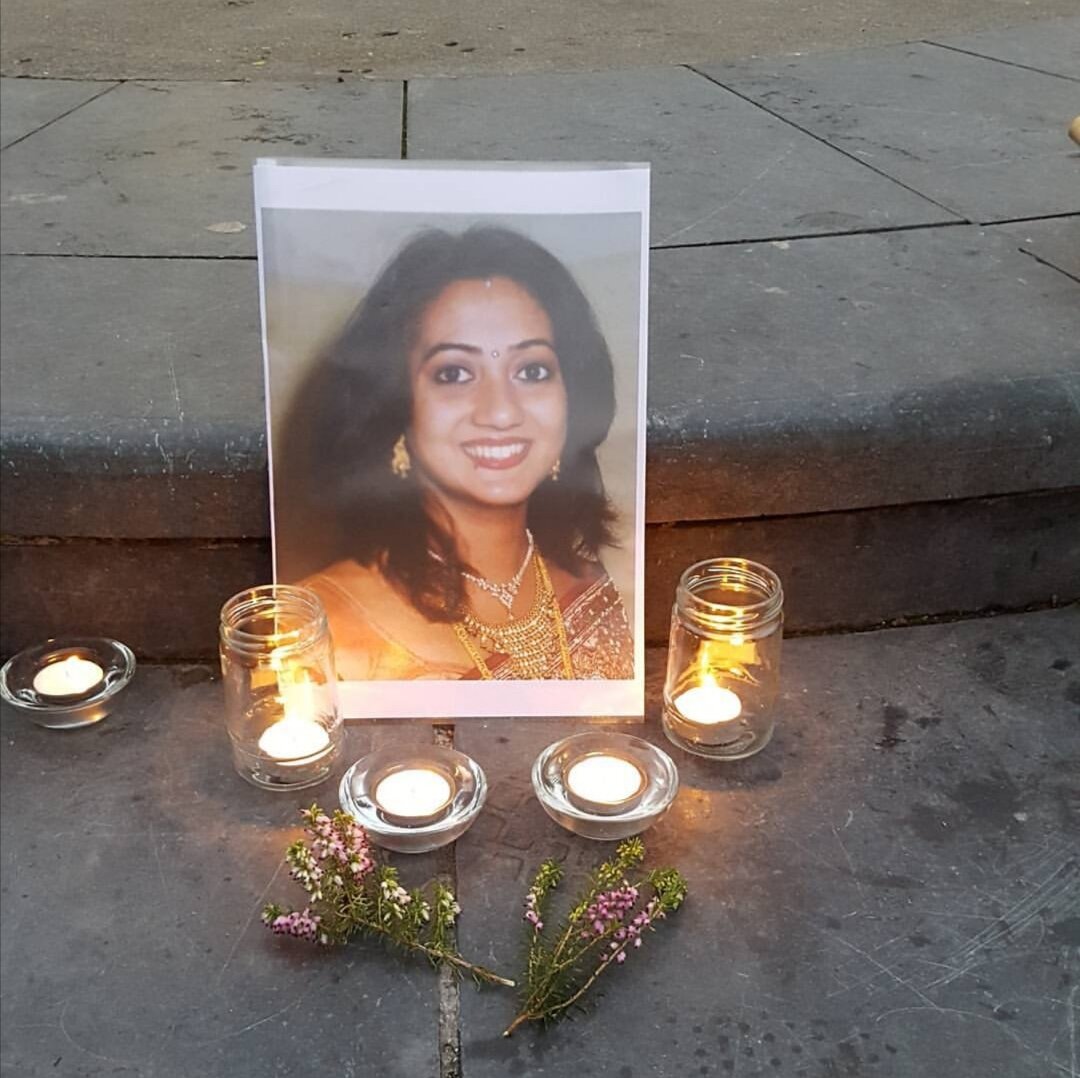
When the news of Savita Halappanavar’s death broke on 14th November 2012, I immediately had questions. I wanted to know how and why this young woman died. We all did.
The answers, according to the findings from the on-going inquest, paint a picture of failure after failure. Letting the Halappanavar’s down and Savita ultimately paying for it with her life. These failures were both human and systemic. There was an unnecessary delay in reviewing all the information and test results, which meant they couldn’t possibly treat Savita correctly. Unfortunately, she never stood a chance.
In the aftermath of Savita’s death I couldn’t get past the thought that it could have been me. Or you. It could have been any woman. Am I confident that it won’t happen again? No and I’m sure I’m not the only one. Women all over the country, and their loved ones, now have something else to contend with when it comes to pregnancy. The question of whether they are receiving the best possible care and if something should go wrong will everything be done to help them get through it? I still do not know the answer to that, and it scares the hell out of me.
Had the X Case already been legislated for would it have saved Savita? Based on the litany of errors that were made throughout this case I would have to say that sadly it probably would not. By the time the doctors realised that her life, as opposed to her health, was in danger it was already too late. There was no hope.
Does this mean that the lack of X Case legislation played no part in Savita’s death? No, it does not. The fact that Savita was refused a termination when she requested one on the Tuesday, the third day of her ordeal, is down to our abortion laws (or lack of laws). This is evident in the fact that the consultant Dr Katherine Astbury, said it couldn’t be done as there was a foetal heartbeat and Savita’s life wasn’t at risk. We now know that Savita’s life was in danger. They just hadn’t realised it yet.
If a termination had been granted when Savita requested it would it have saved her life? It might have stopped the sepsis from taking hold but that is something we’ll never know for sure. What we do know is that a woman who was in the process of a prolonged and painful miscarriage asked for help, with ending the process sooner, and was refused. I’m not comfortable with nor proud of living in a country where this happens.
In trying to explain the reasons for the refusal to the distraught couple, the midwife manager Ann Maria Burke told them that a termination couldn’t be carried out because Ireland is a ‘Catholic country’. Ms. Burke confirmed this at the inquest, after Praveen Halappanavar had initially stated that it was the consultant who spoke those words. Ms. Burke expressed regret for her remarks and to his credit, in what is the latest in a long line of strong and dignified moments from Praveen, he accepted her apology.
It wasn’t simply one thing that led to the untimely death of Savita Halappanavar. There was mistake after mistake and yes, our abortion laws played a role. The extremes, on both sides, of the abortion debate would do well to acknowledge this. Instead of frantically spinning this tragic case to fit their agenda, and their agenda alone.
Back in November, after much consideration I concluded that I was in favour of legislating for the X Case. I could no longer consider myself to be on the pro-life side of this debate. By not supporting abortion on demand (which is a term I’m not a fan of, if anything it would be abortion on request) however, I found myself not fully in the pro-choice camp either. I was somewhere in the uncomfortable middle.
Johnny Fallon articulated some of my own struggles with the issue better than I could, in this Irish Independent article. I can understand where both sides are coming from, which in many ways can be a good thing. When it comes to the contentious issue of abortion though, it doesn’t do you any favours with either side. Anne-Marie Flynn also spoke about this in her piece, when she mentioned that when it comes to abortion ‘no-one can ever claim to be really right’.
I would now consider myself pro-choice and to be honest, I am more interested in exploring what that means than debating with the pro-life side. I have questions about term limits and funding but that is a piece for another time, not that I’ll ever have all the answers.
I don’t know what X Case legislation will look like when it comes. I suspect that in order for it to meet the requirements of ‘The State acknowledges the right to life of the unborn and, with due regard to the equal right to life of the mother, guarantees in its laws to respect, and, as far as is practicable, by its laws to defend and vindicate that right’, it will be something that neither side will be happy with. The pro-life side will deride it for bringing abortion into Ireland, while the pro-choice side will be adamant that it’s not even close enough.
What I do know is that it will do nothing for women who have been told their foetuses are not viable. Or women who find themselves pregnant as a result of rape. Or women who want an abortion for any number of other reasons. And so, the debate will never end.
Savita Halappanavar – sadness, anger, fear and confusion

Needing to attend a hospital because you are in pain is a worrying time. Being pregnant, no doubt, makes it all the scarier as it’s not just your own life you are concerned for.
Being told that you are having a miscarriage is heartbreaking beyond belief. Being left, for three days, in pain with a fully dilated cervix and leaking amniotic fluid is nothing short of barbaric. That this happened to Savita Halappanavar and she died of septicaemia makes my blood run cold.
Why wasn’t Savita put on antibiotics, as a precautionary measure, when they realised her cervix was dilated? When they discovered that she was leaking amniotic fluid and there was no hope of the pregnancy continuing why wasn’t it ended immediately? When it wasn’t over in a few hours, like the Halappanavar’s had been told it would, why did doctors not step in to stop Savita from having to suffer further?
The answers, based on what Praveen Halappanavar says the consultant told them on the three occasions that he and Savita asked for the pregnancy to be terminated, seem to be that, ‘As long as there is a foetal heartbeat we can’t do anything’, ‘It is the law’ and ‘this is Catholic country’. Is that the case? Were the doctors genuinely not allowed to do anything? Is this how our medical and legal system works?
I am neither a doctor nor a lawyer, I do not know the answers to any of these questions. I hope to get them when all the inquiries into this case have concluded.
But I am a woman. A woman who believed that if a woman was miscarrying, and needed hospitalisation, then everything would be done to alleviate her suffering and ensure that the experience was the least traumatic it needed to be.
That this did not happen, for Savita, has left me sad, angry and full of fear. Sad because a woman has lost her life and her husband had to stand by, unable to do anything, as his wife deteriorated before his eyes. Angry that our politicans failure to legislate for the X Case may have caused this. Fearful because it could have been any of us.
Does the treatment a woman recieves in the event of a prolonged or incomplete miscarriage depend on the hospital they attend? Their doctor’s interpretation of how our constitution applies to the situation? Their doctor’s personal beliefs? And not to be insensitive, but, should we hope that if the situation ever arises we are all ‘uncomplicated’ enough to have complete miscarriages so none of these issues come up?
To be honest, until Savita’s death, it hadn’t occurred to me that our abortion law, or lack of a law, would apply to cases of miscarriage at all. I have never classed medical intervention in these situations as an abortion. Yes, it is a termination but for the reason that the pregnancy is already coming to an end and I make no apology for seeing a difference between the two.
Words matter and the way we use ‘abortion’ automatically implies that it was a deliberate choice to end a pregnancy. That is not what a miscarriage is. It is the spontaneous ending of a pregnancy that, sadly, sometimes doesn’t complete itself and a Dilation and Curettage (D&C) or an evacuation of the retained products of conception (ERPC) is required.
Yes, Savita asked for her pregnancy to be ended but because she was already in the process of losing it. Does anyone think she would have done so otherwise?
If someone you know spoke about their miscarriage and the surgery they had would you use the word ‘abortion’ when talking about it with them? Would you describe their experience as an abortion to someone else? No? Then you, too, see a difference between an abortion and the ending of a miscarriage.
From speaking to friends, family and people I’ve met who have been touched by Savita’s death, it’s clear that I’m not the only one who made this distinction. The fact that we may have been wrong, to do so, has shocked us to the core.
There is a lot of confusion out there and it is this fear and confusion that propelled many of my friends and family to contact TDs and attend protest marches for the first time. Yes, they were angry but it was fear that made them act on their anger rather than simply shouting about it on Twitter and Facebook for a few days and then moving on to the next rage inducing incident. This one was different.
This could have been any woman. You, your mother, daughter, sister, cousin, niece, friend, girlfriend, wife or the woman you see every morning at the bus stop. It was these feelings that led me to Leinster House for the vigil/protest last Wednesday evening. I needed a way of expressing my sympathy over Savita’s death. I needed the government to know that I wanted answers and action. I needed to be around people who felt the same way. I needed a way of showing that I cared enough to want things to change.
Personally, I was not there calling for abortion on demand or to use Savita’s death and the X Case as a stepping stone to reaching that goal. I was there to remind our legislators that we need legal clarification of our constitutional situation with regards to the X Case ruling from 20 years ago. The rest is a fight for another day. A fight that I’m not particularly comfortable using Savita’s death to forward.
Abortion has always been a contentious issue. One that sees an extremely vocal and militant pro-life side argue with an extremely vocal and militant pro-choice side (and nine times out of ten it appears to be about what label they choose to call themselves by,) while a significant portion of the population are too afraid to say anything, one way or the other, because they know they’ll be shouted down by the extremes.
One thing I have seen since Savita’s death is that the people in the middle are finding their voice and looking for a way of being heard. This can only be a good thing and might finally lead to the mature, rational and calm debate that this country needs. Yes, we need answers. We need the Expert Group’s report to be published. We need the government to act on its recommendations. We need these things to happen sooner rather than later. We’ve waited long enough.