• About
  • Newsletter
  • Writing Elsewhere
  • Sexual Health Resources
  • Essays
  • Opinion
  • Reviews
Menu

Paula Dennan

Street Address
City, State, Zip
Phone Number

Your Custom Text Here

Paula Dennan

  • About
  • Newsletter
  • Writing Elsewhere
  • Sexual Health Resources
  • Essays
  • Opinion
  • Reviews

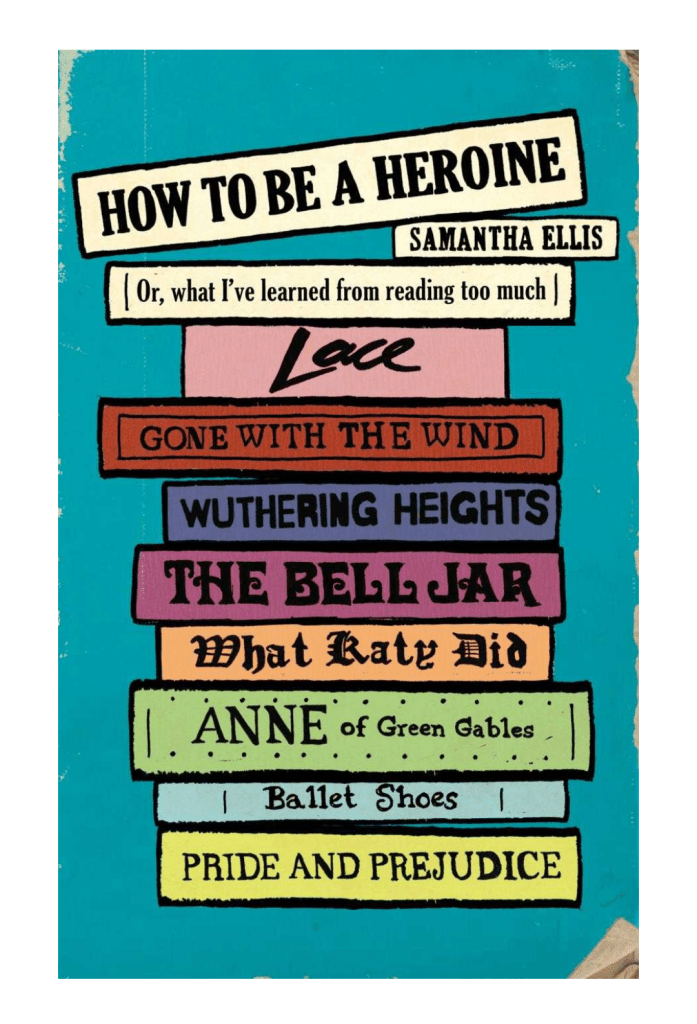
How To Be A Heroine by Samantha Ellis

April 8, 2015 Paula Dennan
how-to-be-a-heroine.png

How To Be A Heroine has been on my radar for a while, but now seemed like the perfect time to read it since it deals with something I’m currently working on a blog post about; the idea that the time, place and state of mind you are in plays a significant part in how you react to novels, plays, films, and music.

Samantha Ellis finds herself arguing with her best friend about whether Cathy Earnshaw is a better heroine than Jane Eyre. Ellis is firmly in the Cathy camp, while her friend thinks that Jane is the one who really makes her own way in the world.

Has she spent her life trying to be Cathy Earnshaw when she should have been trying to be Jane Eyre? A return to the literary heroines that shaped her life was in order. How did she feel about them now?

Some characters stood up to the scrutiny better than others, some opinions changed for the better and some changed for the worst.

Part memoir and part literary analysis, with a side of women’s studies, Ellis’ words are refreshing, yet somehow comforting. It will leave you wanting to read the books you haven’t and re-read the ones you love. A book lover’s dream.

How To Be A Heroine is a book I wish I had written. You need it in your life. I will be thrusting it into people’s hands, demanding they read it and then talk about it for hours with me.

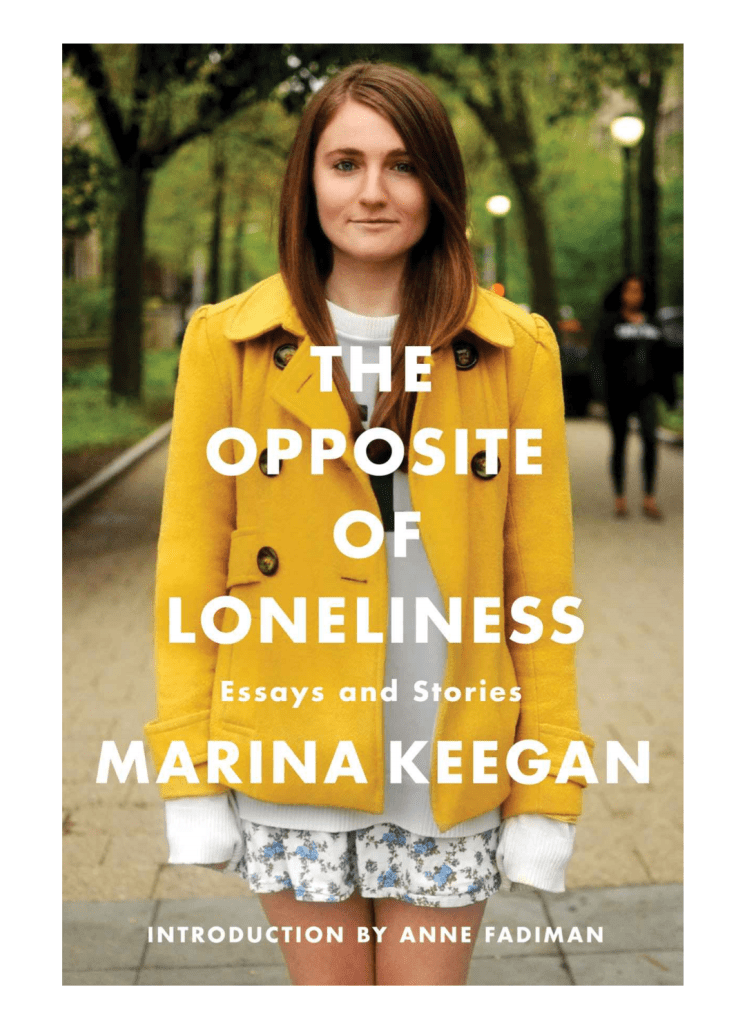
The Opposite of Loneliness – Essays and Stories by Marina Keegan

March 19, 2015 Paula Dennan
the-opposite-of-loneliness.png

Like most people, I first heard about Marina Keegan following her death in 2012. She was killed in a car crash a few days after graduating from Yale. She was 22.

The essay, entitled The Opposite of Loneliness, she wrote to mark graduation quickly went viral. Dealing with uncertainty, Keegan’s words urged people to be fearless, embrace change and stop being constrained by expectations; both their own and the expectations of others. It’s easy to see why it struck a chord with so many.

This collection of essays and short stories, published posthumously, is very much about realising that things are OK. It’s OK to be feeling the way you are feeling. It’s OK to not know where your life is going. It’s equally OK to be excited about where your life is going.

For me the short stories are slightly more accomplished than the essays, but Keegan’s observations on and understanding of the human condition run through them all.

Green Girl by Kate Zambreno

February 25, 2015 Paula Dennan
green-girl.png

Have you ever come across a book that is a few years old, but suddenly you hear lots of talk about it? That’s what happened to me with Kate Zambreno’s Green Girl. Some friends recommended I read it and then I came across it in Roxane Gay’s Bad Feminist.

Ruth is a young American woman living in London. She sells perfume in Horrids (her name for it). Her days are spent spritzing people with Desire. Her nights are spent trying to find her way in the world; navigating her way through anxiety, friendships, relationships, nights out that involve drinking too much and the male gaze. More importantly, Ruth is desperately trying to make sense of the space between where she is now and what she deems to be proper adulthood.

I think I came to Green Girl too late. If I read it in my teens or early 20s I imagine it would have affected me in the same way that Sylvia Plath’s The Bell Jar, Jean Rhys’ Good Morning, Midnight and Virginia Woolf’s Mrs Dalloway did. That visceral and sometimes gut wrenching way that leads me to re-read those books regularly even though I know them inside out, yet, I am always drawn in as if discovering them for the first time.

Don’t get me wrong, Zambreno is a talented writer and Green Girl is worth adding to your to-read list. It’s just that it unexpectedly hit on something I have been thinking a lot about lately; how the time, place and state of mind you are in plays a part in the reaction you have to novels, films and music. I may save that thought for another blog post.

Only Every Yours by Louise O'Neill

February 13, 2015 Paula Dennan
only-ever-yours.png

Set in a future where girls are taught how to serve and please men, Only Ever Yours is a sharply written portrayal of teenage girls and the role of women in society.

freida and isabel (their names aren’t capitalised in the book) are best friends. They are also eves. They have been created for men and face a life spent living as a companion, a concubine or a chastity.

In their 16th and final year at boarding school things begin to change. The choosing ceremony is approaching and every girl is vying for a place as a companion.

isabel begins to put on weight, something which doesn’t fit the ‘ideal’ that the eves must live up too. Her chance of being chosen as a companion may be at stake. freida can’t understand what is happening to her friend, but she is also secretly pleased that she outranks isabel for once. The other students turn on isabel and delight in using her weight gain against her.

Reminiscent, in parts, of Margaret Atwood’s The Handmaid’s Tale, Kazuo Ishiguro’s Never Let Me Go and Mean Girls; O’Neill brilliantly captures the voices of insecure teenagers who regardless of what is going on around them are trying to find their way in the world. But this is a world that doesn’t allow people to deviate from the plan.

Upon finishing this book I needed to sit quietly, for a while, and process it. There are no happy endings here, but the ending was a necessary one.

Only Ever Yours is worth a read no matter what your age, but if you know any teenagers you should give them a copy immediately.

Bad Feminist by Roxane Gay

February 11, 2015 Paula Dennan
bad-feminist-kindle.png

I’ve linked to some of Roxane Gay’s essays before. Since discovering her work in 2013, she has become one of my favourite essayists. Bad Feminist has been on my to-read list since it was released and the Kindle sale over Christmas provided the perfect opportunity to pick it up.

In parts memoir, reviews, critiques of pop culture, and comments on the state of contemporary feminism Bad Feminist switches between them all in a confident manner that highlights how everything is intertwined.

On a rational level we may know certain songs, films and/or TV shows are problematic yet we can still find ourselves drawn to them. I’m sure we’ve all got things we refer to as ‘guilty pleasures’ for this very reason.

Gay’s writing is smart, funny and well able to pack a punch when needed. I may not always agree with her conclusions, but her words often make me stop and think about things in ways that I hadn’t before. Which is what you want from a writer, right?

This is one book that I recommend you all add to your to-read lists.

Unravelling Oliver by Liz Nugent

February 9, 2015 Paula Dennan
unravelling-oliver.jpg

“I expected more of a reaction the first time I hit her.”

From the opening sentence, the scene is set. Oliver Ryan has hit his wife, Alice, before. On this occasion Alice has been left in coma.

What sort of a man would psychically abuse his wife? This question is at the heart of Unravelling Oliver. As we delve deeper into the life of Oliver Ryan we realise this isn’t an easy question to answer. But then it isn’t in real life either. How many times have we heard variations on “man of good character” when it comes to violence against women?

Told from multiple points of view the story makes us question everything that Oliver has shared and the manner in which he has shared it. Even while he is sharing it. There’s Oliver, himself, described as a handsome and charismatic success story. We also hear from Barney, Michael, Eugene Stanley, Moya, Philip and Veronique. Their lives have all been affected by Oliver at some point.

For me, there are two voices missing from this book; that of Alice and Oliver’s ex-girlfriend Laura. We hear so much about them, often contradictory things, but we never hear from them which left me a little uneasy. They are the character’s that stayed with me the longest after finishing the novel and I think that’s because there is still so much about them that I don’t know.

Overall, I would recommend Unravelling Oliver. It’s full of twists and turns, Nugent’s writing is gripping and I am looking forward to whatever she has in store for us next.

The Boy That Never Was by Karen Perry

August 4, 2014 Paula Dennan
the-boy-that-never-was-1.jpg

I picked up The Boy That Never Was from the library on a whim and read it in one sitting. It’s definitely a page turner.

How would you react if you left your child alone and they disappeared? That’s the central theme of The Boy That Never Was. Harry has never forgiven himself, yet Robyn has never once blamed her husband. They’ve returned to Dublin from Tangier to make a fresh start, or try to at least, but their world is turned upside down for a second time when Harry sees an eight-year-old boy in a crowd. He is convinced the boy is their son Dillon, but he disappears before Harry can do anything about it.

There is a great mix of tension and family drama. Watching Harry struggle to keep a grip on his life is not easy and I spent most of the book switching between worrying about his mental health, really disliking him and willing him on. This is not just a story about Harry though, Robyn has her own secrets. Secrets that become increasingly more difficult to keep.

The writing is fast paced without being one dimensional. Some of the more emotional scenes are beautifully written.

My only issue with The Boy That Never Was is that it tied up too many loose ends, but maybe I’m alone in liking books that leave me with questions.

Karen Perry is the pen name of Karen Gillece and Paul Perry. I don’t know how they approach writing together, but it flows so well that I didn’t even realise it was written by two people until I was finished. I’ve had difficulty with multiple authors in the past as I found the tone of writing changed too much throughout the story, but that isn’t an issue here.

Lamb by Bonnie Nadzam

February 18, 2014 Paula Dennan
lamb-by-bonnie-nadzam.jpg

I ordered a copy of Lamb by Bonnie Nadzam almost as soon as I finished reading a review by Lorraine of John, It’s Only Makeup! Any book that compels a person to read it multiple times is guaranteed a place on my to-read list and in this case I wasn’t disappointed.

“Tommie is eleven. David Lamb is fifty-four. There’s nothing wrong with that, is there?”

With these words, written on the book’s cover, the scene is set. An accidental meeting leads to an unconventional and at times incredibly disturbing friendship between David Lamb, a middle aged man whose life doesn’t seem to be going to plan, and Tommie, a young girl whose home and school life aren’t exactly picture perfect.

Lamb decides to ‘save’ Tommie from her humdrum life and convinces her to go on a road trip with him. What follows is an experience that asks just as many questions as it answers leaving the reader not only with a knot in the pit of their stomach, but with their heart in their mouth on more than one occasion.

Nadzam has a beautiful way of writing about outdoor scenery that rivals the prose of Annie Proulx. Every word serves a purpose, there are no excesses here. In Lamb the descriptions of mountains and sky are scattered amongst a tale that will keep you on the edge of your seat. You know it can’t possibly end well for Lamb and Tommie, but you can’t quite figure out the moment at which it will all come crumbling down around them.

I won’t give too much away, but I will say that Lamb is a novel that stayed with me long after I turned the final page. I can’t recommend it highly enough.

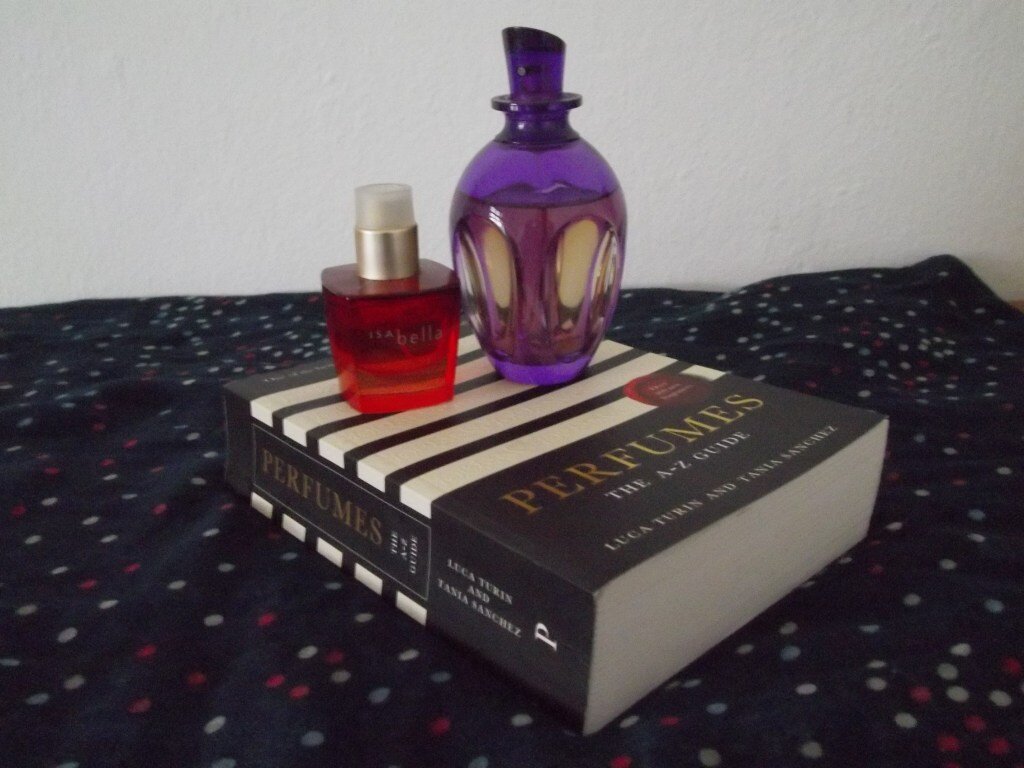
Perfumes: The A-Z Guide by Luca Turin and Tania Sanchez

February 15, 2014 Paula Dennan
perfumes-a-z-guide-by-luca-turin-and-tania-sanchez.jpg

A book about perfume written by a scientist and a perfume critic is going to be boring, right? Wrong. Turin and Sanchez have a way with words that not only make the world of fragrance accessible, but also entertaining.

Perfumes The A-Z Guide introduces us to perfume criticism, takes us through the different ways we perceive feminine and masculine fragrances, teaches us how to go about choosing a new scent, and gives us a brief history of perfume. This is all before we come to the frequently asked questions section which is the most comprehensive I’ve seen anywhere. Each chapter is written with not only knowledge, but more humour than you thought possible when discussing perfume. All that’s left are the perfume reviews.

Oh, the perfume reviews. There are almost 1,500 no holds barred, if we think a perfume is awful then we’ll say just that, reviews to dip in and out of. Preceding each review is a star rating out of five, a price indication (based on the standard US retail price) and a two word description of the perfume’s main character, e.g. Alien by Thierry Mugler is described as a woody jasmine.

I’m not going to lie, I went straight to my favourite perfumes to see what Turin and Sanchez thought of them. Isabella by Isabella Rosselini is not listed and the others didn’t fare as well as I would have liked, MyQueen by Alexander McQueen received two stars (not recommended) and Alien by Thierry Mugler received three stars (good). Although it was interesting to see where our opinions differed, there is no fear of me changing my mind and we do agree that Viktor & Rolf’s Flowerbomb is far too rosy.  I’ve said before scent is a personal thing and you like the perfumes you like even if others don’t. That’s what we love about them and is one of the reasons why there are so many on the market.

Whether you are a newcomer to, or a long time lover of, the world of fragrance there is something here for everyone. Perfumes The A-Z Guide would make a welcome addition to any book shelf or coffee table. Luca Turin’s other book The Secret of Scent is firmly on my to-read list and my to-try perfume list has almost doubled in length.

I don’t use affiliate links, but if you like what I do you can show your support by buying me a coffee here.

The Hours by Michael Cunningham

January 18, 2014 Paula Dennan
the-hours-by-michael-cunningham.jpg

If I’ve ever bought you a book as a present, loaned you a book or just recommended a book to you then there’s a good chance that it was ‘The Hours’ by Michael Cunningham. It is my favourite novel and I like to share it.

‘The Hours’ won the Pulitzer Prize for Fiction in 1999 and was adapted into a film starring Nicole Kidman, Meryl Streep and Julianne Moore in 2002 so I suspect everyone is familiar with the story by now, even if they haven’t read the book.

Cunningham tells the story of three women who have all been affected, in some way, by Virginia Woolf’s ‘Mrs. Dalloway’.

The first is Virginia Woolf herself. Although the prologue opens with her suicide in 1941 it is actually a fictionalised day in 1923, when she is beginning to write ‘Mrs. Dalloway’ (the working title for which was ‘The Hours’), that Cunningham chooses to focus on for the remainder of the novel.

Laura Brown is living in Los Angeles in 1949. As we join her she is reading ‘Mrs. Dalloway’ and planning a birthday celebration for her husband, a World War II veteran.

Clarissa Vaughan is living in New York at the end of twentieth century. She is planning a party for a dear and dying friend, he has AIDS, who has won a poetry prize. Clarissa Vaughan is very much a modern incarnation of Clarissa Dalloway.

What unfolds over the course of 226 pages is a beautifully written, poetically so in some passages, ‘riff’ (to use Cunningham’s own description) on ‘Mrs. Dalloway’ that touches on the banality of everyday life, our own internal discussions with ourselves, writing as not just an art form but a way of being, why we read, mental health issues, how past relationships affect our present, sexuality, and how people cope with illness.

It reduced me to tears the first time I read it and it still has the ability to floor me with every re-read, even though I know the story inside out by this stage. It stays with me for days after I put it down and a re-read of Woolf’s ‘Mrs. Dalloway’ is never far behind.

So much of the novel is made up of the inner monologues of Woolf, Brown and Vaughan that it seemed impossible to translate into film. But adapt it David Hare did. Directed by Stephen Daldry, ‘The Hours’ is a stunning film but there are differences from the book.

Turning the characters inner monologues into something external made that inevitable. For me these differences are at their most evident in the scene between Clarissa and Louis and, again, with Laura’s trip to the hotel and the scenes involved in the run up to that.

Don’t get me wrong, I loved the film and re-watch it every time I re-read the book. Screenplays being different from the novels they adapt is nothing new, it is why nine times out of ten I’ll prefer the book.

If you are new to ‘Mrs. Dalloway’ and ‘The Hours’ then I suggest you start with ‘Mrs. Dalloway’. It is not a prerequisite for understanding ‘The Hours’, but I think it’ll enhance the experience. And if you haven’t read ‘Mrs. Dalloway’ in years then ‘The Hours’ is sure to have you reaching for it again.
← Newer Posts