
Dear Mr. You by Mary-Louise Parker

There was such a fog around me that I felt like I had entered a Whitesnake video.
Dear Mr. You is not your typical Hollywood memoir. It is a brilliantly crafted literary memoir written in letter form to the men who have helped shape Mary-Louise Parker’s life.
The men in these letters include her grandfather, her father, an oyster picker, the doctor who saved her life, and a taxi driver. There is even an apology to NASA.
The fragmented and almost stream of consciousness glimpses at certain periods in Parker’s life add up to a beautiful, compassionate, humorous, thoughtful, intimate, heartbreaking and complex look at how our experiences affect us, positively and negatively.
Dear Mr. You is a deeply personal book. A book that offers great insight into Mary-Louise Parker the person, rather than the actress we think we know because we’ve seen her perform. If you are looking for celebrity gossip and behind the scenes stories you won’t find them here.
Mary-Louise Parker can write and Dear Mr. You is glorious. I only wish there were some Dear Ms. You letters included. Maybe there will be a second memoir. Whatever Mary-Louise Parker has planned next I’m looking forward to reading it.
Am I Normal Yet? by Holly Bourne

So much is lost when you lose yourself. Not just your pride, or your hope. But worse things, things that affect others. Like your ability to help them when they need you, to notice when they’re hurting.
Evie is sixteen and desperately wants to be normal. She is almost off her medication and is finally making new friends at a college where no one knows her past. She is no longer known as the girl who went crazy. Having a boyfriend would be the final step in being a normal teenager, right?
Things I loved about the book; the insight into mental illness, treatment (both medication and counselling) and relapse. There were times when I felt like I was inside Evie’s mind as OCD and the related anxiety took hold.
The explorations of female friendships and the feminist discussion and strands throughout the novel were excellently done without ever feeling like a lecture. Yes, there are times when research is quoted but it feels like something that the characters would do rather than the author’s voice taking over.
“Everyone’s on the cliff edge of normal. Everyone finds life an utter nightmare sometimes, and there’s no ‘normal’ way of dealing with it.” Sarah sighed. “There is no normal, Evelyn. There’s only what’s normal to you. You’re chasing a ghost.”
Things I didn’t like about the book; my only fault with Am I Normal Yet? is that the initial discussion between Evie, Amber and Lottie about periods focuses on the idea periods are the only thing that make you a woman. In a novel so full of feminism, both in practice and in theory, the lack of awareness about the experiences of trans* people jarred with me.
Overall, Am I Normal Yet? is the kind of novel I wish I’d read when I was a teenager and I’m looking forward to the remainder of the trilogy.
Places I Stopped On The Way Home by Meg Fee

I am the stumbling, stubborn belief that one word becomes two and one foot in front of the other. I am every man who has ever hurt me, and the promise we’ve only got to get it right once. I am all that has yet to happen and the hope that it’ll be worth the wait.
One of the reasons I love blogs so much is that they have led me to discover some brilliant writing by women. Places I Stopped On The Way Home by Meg Fee is one such example. I stumbled across Meg’s blog, the wild and wily ways of a Brunette “Bombshell”, last year and felt compelled to read the entire blog. When Meg announced that she had published an ebook the decision to purchase it was a no-brainer.
Places I Stopped On The Way Home is a collection of essays about Meg’s time in New York and the men who have affected her life; some for the better, some for the worse, but all of them taught her something about herself.
I read Places I Stopped On The Way Home in one sitting, but it won’t be my last. These are essays I will return to. These are essays that made me feel like I was there, like I was standing in Meg’s shoes. I laughed. I cried. I felt frustrated. I felt butterflies in my stomach. I felt hope.
In the age of blogs, social media and the personal essay Places I Stopped On The Way Home gets the balance between personal and private right. It doesn’t feel like oversharing because it isn’t. It is full of beauty, vulnerability, questioning, love, realisation and acceptance.
Places I Stopped On The Way Home may be one woman’s outlook on life, but it will leave you wanting to make the most of yours.
The Book of Brave by Laura Jane Williams

You’re not fucking up like you think you are.
As soon as I heard about The Book of Brave by Laura Jane Williams I knew I had to read it. Laura’s blog, Superlatively Rude, is one of my favourites and I’m always on the lookout for more essays and non-fiction.
Laura Jane Williams is all about living her life to the fullest, something that has taken her to Austria, Russia, Malaysia, Bali, Thailand, India and Italy. She has learned a lot along the way and focuses on doing the things that scare her. No matter how small those things are.
The Book of Brave is not a self-help book. The Book of Brave is not a how-to guide. The Book of Brave is a reflection on how Laura Jane Williams decided to make the most of her life and work on liking herself.
There is no “good” and “bad”. It all just is. You just are. We all just are.
There may be times when things don’t go according to plan. These are the times when you need to stop and re-evaluate what you want from life. Sometimes you’ll make mistakes; the important thing is that you learn from them.
The thing that stuck with me most from The Book of Brave is the idea that you need to stop beating yourself up for the things you’ve done in the past. There is nothing you can do to change them. You can try your best to fix it, but they may not be fixable. Either way, there is no going back so you need to focus on the person you are now.
This may not sound like a radical notion, but Laura’s honesty enables you to look at this almost simple idea with fresh eyes. Being kind to yourself often sounds easier than it actually is. It can take time and practice. So start today.
The Book of Brave won’t tell you how to improve your own life, but it will make you more determined to ask the right questions and figure it out for yourself. And who couldn’t do with some extra motivation?
The Determined Heart: The Tale of Mary Shelley and Her Frankenstein by Antoinette May

The daughter of political philosopher William Godwin and feminist Mary Wollstonecraft, Mary Shelley’s (née Godwin) life was bound to be an intriguing one. To describe her life as unconventional would be an understatement.
What Antoinette May does with The Determined Heart: The Tale of Mary Shelley and Her Frankenstein is take the details of Shelley’s life and weave them as a fictional narrative that hooks the reader from the beginning.
From a young age it is clear that Mary Godwin’s life will be entwined with that of her mother, Mary Wollstonecraft, even though Wollstonecraft is dead. Her daughter is clearly intelligent, talented and outspoken like her mother.
When William Godwin remarries, Mary finds herself in constant conflict with her stepmother and stepsister. Life is not as Mary would have hoped, but her father’s standing means that she is introduced to an endless array of talented, interesting and often times eccentric people.
One of those people is Percy Bysshe Shelley, whom she falls in love with. He feels the same and despite Bysshe’s marital status they run away together, taking Mary’s stepsister along with them.
This is a story of love; a story of obsession, a story of betrayal, a story of redemption, a story of loss and coping with loss, a story of regret, a story of marriage, love affairs and the validity of marriage. This is a story about inspiration and creativity. This is the story of how Mary Shelley came to write Frankenstein.
Life is not always easy for Mary and Bysshe. They have been ostracised and face financial crisis on numerous occasions. Bysshe also begins an affair with Claire, Mary’s stepsister.
Throughout this time they forge friendships with people like Lord Byron and plan to leave their mark on the world.
Shelley’s life is shaped by love. Love for her mother. Love for her father. Love for Bysshe. It is also shaped by loss; loss of her mother, separation from her family, the deaths of three children and the eventual loss of Bysshe.
All the while Shelley is gathering inspiration from things she has seen, read and been told. Inspiration that, prompted by Lord Byron’s suggestion that each of their group write a ghost story, would become Frankenstein a novel that is still read and loved today.
This is a story well told, May does a good job of bringing Mary Shelley et al to life. I would recommend this book to two types of people; those who are interested in historical fiction in general and those who wish to learn more about Mary Shelley and how she came to write Frankenstein, progressing the genre of science-fiction, but are not fans of non-fiction.
Asking For It by Louise O’Neill

They are all innocent until proven guilty. But not me. I am a liar until I am proven honest.”
Asking For It, Louise O’Neill’s second novel, tells the story of Emma O’Donovan a secondary school student living in small town Ireland. Emma and her friends like to have a good time. This includes nights out, with pre drinks while they are getting ready and being in constant competition with each other to be seen as the prettiest.
Following a party, Emma wakes up on her doorstep with little memory of what happened or how she got home. She can’t explain where the bruises came from. She remembers going to the party, the drinks, flirting and taking pills but after that everything is blank.
A Facebook page soon appears full of photographs showing, in graphic detail, what went on at the party. No one will talk her, choosing to whisper behind her back instead. But Emma didn’t allow those photos to be taken, did she?
Emma’s life is turned upside down as she pieces together the events of that night and tries to come to terms with what happened to her and the reactions of her family, friends and the wider community.
While obviously based on the Steubenville and Maryville cases there are elements of this novel that will strike particular chords with readers in Ireland.
The sharing of images on social media and the media coverage that follows made me think of “Slane Girl”. The actions of the parish priest are reminiscent of Fr Sean Sheehy, who was among a group of people who shook hands with Danny Foley following his conviction for sexual assault. Communities rallying around men accused of sexual assault and rape is an all too common occurrence even when those men have been found guilty.
These aren’t the actions of people from an Ireland of old. They all happened in the last 6 years. This is the world we live in. This is the world that O’Neill skilfully and painfully explores.
Emma may not be as likeable a person as we expect a victim to be, but that is kind of the point. Why do we expect victims of rape or sexual assault to be a certain way? Why do victims have to be likeable? Is there anything that Emma could possibly have done to deserve what happened to her? Of course there isn’t and these questions shouldn’t be questions at all.
Yet, we all know that when it comes to sexual assault and rape questions about what the victim was wearing, drinking, doing and whether they were “asking for it” happen. It often happens in the very place that people turn to for justice, our court system. Is it any wonder that so many women don’t report when they have been sexually assaulted or raped?
It would be easy for O’Neill to give us the satisfying ending we so desperately want. But the ending you want isn’t always the ending you need and O’Neill has already shown us, with her debut novel Only Ever Yours, that she is the master of endings that are necessary.
I was left shaking with rage when I finished Asking For It and 3 weeks later I am still thinking about Emma O’Donovan. I wonder how she is doing and whether she has found some sense of peace since the conclusion of the novel.
More importantly, I wonder how all the Emmas of the world are coping. Do they blame themselves? Do they have someone or somewhere to turn for support? Do they have someone to reassure them that it is definitely not their fault? Do they know that they are not alone?
Asking For It may be difficult to read, subject wise, but it is essential. When you’ve read it make sure everyone you know reads it too, especially teenagers. The resulting conversations about consent, rape culture and victim blaming are extremely important.
Broken Grace by E.C. Diskin

Imagine waking up with no memory. You’ve been in a car crash, but more than just having no memory of the crash you can’t remember any personal details about your life.
Now imagine being told that your boyfriend is dead. Worse, he was murdered and since you don’t know what you were doing prior to the crash you are a suspect.
Welcome to Grace’s world. A place full of half truths, as she tries to piece her life back together and figure out whether she is capable of murder.
“We could all kill someone, couldn’t we?”
I wasn’t sure about Broken Grace to begin with, it felt a bit predictable. Not helped by the clichéd relationship between the two police officers investigating the murder. You know, the rookie cop comes up against an older partner who automatically thinks he knows better simply because he has been around longer.
Thankfully things kicked up a notch about a third of the way in and that unexpected turn I was hoping for made its appearance.
From then on I was gripped by the story. As flashes of Grace’s memory return she tries to match them with what she has been told by the people around her, especially her sister. But things aren’t always what they seem.
You may or may not see the ending coming. I’ll admit to predicting some, but not all, of it.
Over all, it was a decent mystery that won me round despite my initial misgivings.
One by Sarah Crossan

One by Sarah Crossan is the story of conjoined twins, Grace and Tippi.
At 16 Grace and Tippi are about to start a new school. This will be their first time attending school as they have been homeschooled up until now, but the funds have run out.
How will they cope with their new world? Will they make friends? How can they assert their individuality when they are seen as one by so many people? And when something happens that could change their lives forever what will they decide to do?
Written in free verse and told through the eyes of Grace, One* is a moving look at sisterhood, friendship, love and identity.
The use of free verse is glorious; Crossan has a way with words that left me speechless more than once and had me rereading passages in awe.
It is beautifully written, evocative and at times heartbreaking. One is an excellent reminder of how brilliant YA can be and it’s one of my favourite books of the year.
Americanah by Chimamanda Ngozi Adichie

“Why did people ask “What is it about?” as if a novel had to be about only one thing.”
That is the perfect quote for talking about Americanah. This is not a book about only one thing. It is a book about race, love (both for yourself and romantic love), interracial relationships, leaving home to make a life for yourself in a new country, acceptance and hair.
As she prepares to return to Nigeria after years living in America, Ifemelu reflects on her life to date; on growing up in Nigeria, her family, her relationship with Obinze her high school boyfriend and everything that has happened since her move to the States.
“Racism should never have happened and so you don’t get a cookie for reducing it.”
Things I like about the book; the sense of place. Adichie effortlessly switches between Nigeria, America and the UK making each of them leap from the page.
The dialogue, Adichie doesn’t shy away from difficult conversations.
The switch in point of view; in some of the chapters we follow Obinze and learn about his time in the UK.
Ifemelu’s blog posts are brilliantly written commentaries on the intricacies of not only being black in America, but being a Non-American Black.
Things I didn’t like/questioned about the book; the length. It was about 50 pages too long for me. Tighter editing would have gotten rid of some of the more indulgent passages.
I’m nitpicking now, but parts of Americanah are so raw and honest that I felt they wandered into memoir territory. This is hardly surprising for a semi autobiographical novel and isn’t necessarily a negative here, it just made me wish Adichie had written a memoir.
Overall, Americanah is a thoughtful novel that isn’t afraid to deal with issues that make people (and let’s be honest, it’s probably mainly white people) uncomfortable. This is a book that will stay with you long after you’ve turned the final page.
Human Remains by Elizabeth Haynes
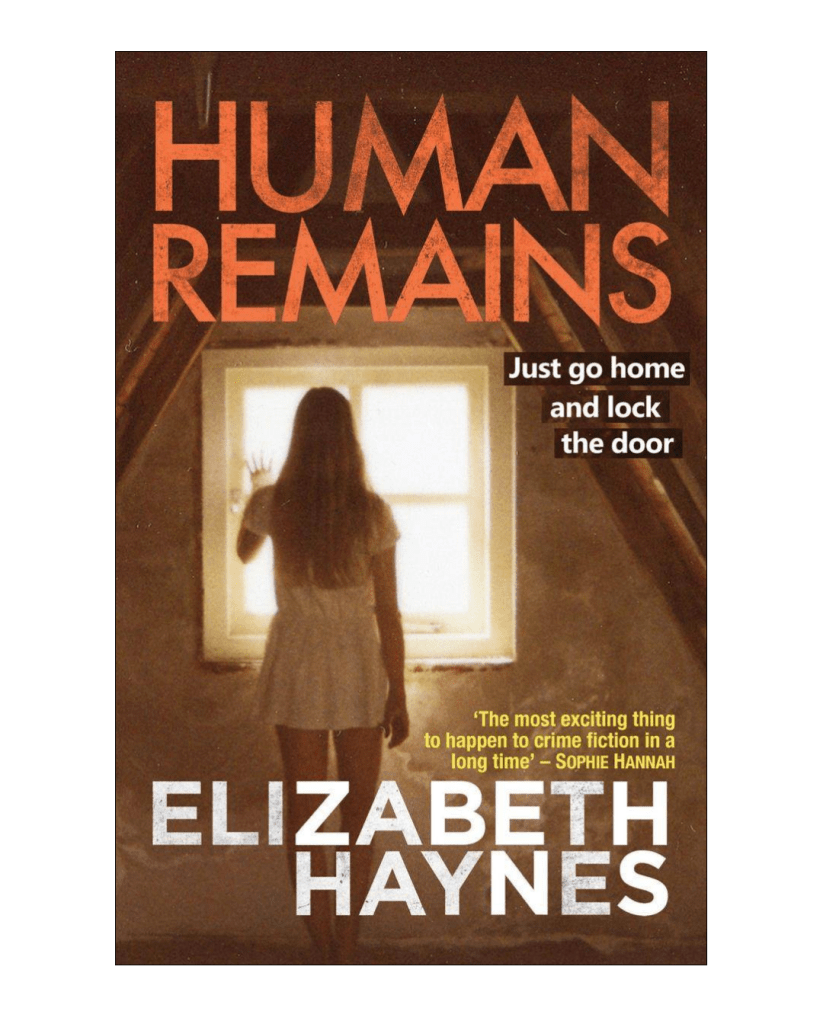
“If people stop looking at you, do you cease to exist? Does it mean you’re not a person anymore? Does it mean you’re already dead?”
Annabel is a police analyst who has discovered her neighbour’s decomposing body in the house next door. She can’t believe that no-one, including her, made the discovery sooner.
In trying to figure out what happened she finds data showing an increasingly high number of decomposing remains have been found in the town over the last year. Their deaths appear to be from natural causes, yet they are all found long afterwards. They are not being murdered, so what is happening to these people? Have they all just given up on life? Annabel decides to find out.
“Nobody can see pain. They have no frame of reference for pain that’s happening to someone else. They can only see inactivity – which they interpret as laziness.”
Colin is…well, Colin is difficult to explain. He is a man with few friends and some “interesting”, although that doesn’t seem the appropriate way to describe them, obsessions and compulsions including an interest in the girlfriend of his best (only?) friend.
“You never realise what loneliness is until it creeps up on you – like a disease, it is something that happens to you gradually. And of course the alcohol doesn’t help: you drink it to forget about how shit it is living like that, and then when you stop drinking everything looks a hell of a lot worse. So you keep drinking to try and blot it all out.”
Interspersed throughout are poignant snippets of the “victims” lives where we learn why each of them wanted to die.
I don’t want to say too much else about the plot. Not because it’s some big whodunit, it is obvious pretty early on who is involved, but watching the events slowly (and this is a slow paced novel) unfold from both Annabel and Colin’s perspective adds to the atmosphere of Human Remains.
This isn’t your standard crime novel. It is a disturbing, gruesome, frightening and thought-provoking psychological thriller that will stay with you.
Haynes has created a story that could happen anywhere, at any time and makes you think about loneliness, death and the power of the mind in ways you might not have before.
Terrifying doesn’t even begin to cover it. My skin is still crawling even thinking about it.
I have one piece of advice; don’t read this book late at night, especially if you’re home alone. It will either keep you awake or you’ll spend ages turning on all the lights and double checking that all your doors and windows are locked.
Eleanor & Park by Rainbow Rowell

They agreed about everything important and argued about everything else.”
Set in 1986, Eleanor & Park is the story of two teenagers named Eleanor and Park. They meet on the school bus, when Park somewhat grudgingly asks Eleanor to sit beside him on her first day, and soon develop a relationship that runs deeper than either of them had expected.
Things I like about the book; the use of the comics they read and the mix tapes they make and listen to. It’s a gorgeous way to witness the first flushes of love. Getting the story from the point of view of both characters, I liked knowing what was going on in their heads even when they didn’t know what each other was going through.
Things I didn’t like about the book; that significant parts of what looked like a story different to other YA novels ended up being similar to other YA novels. Namely, the home lives of Eleanor and Park. I understand that some drama was necessary, but this was too much.
Park’s entire relationship with his father seemed like an afterthought designed to keep him from being too perfect.
The abusive step-father storyline has been used in more books than I can count, so it needs to be believable and something about Eleanor’s relationship with her step-father and by extension her family didn’t ring true for me. I could see what Rowell, the author, was doing and why but I wasn’t engaged enough to get absorbed by that aspect of the novel in the same way I did the rest.
My feelings about the ending are equally as mixed. I didn’t like the circumstances that lead to how the novel concludes, but elements of it were so well written they felt like a punch in the gut.
Spill Simmer Falter Wither by Sara Baume

A story about one man and his dog doesn’t sound original, yet Spill Simmer Falter Wither is an extraordinary novel.
Our protagonist and his dog, One Eye, take off on a road trip after One Eye bites another dog. From a socially awkward man who likes to stick to his routine this is clearly a decision made in a panic.
As the journey progresses we learn more about Ray (our protagonist, although his name is only eluded to), his upbringing and why he views the world the way he does. It is a simple story adeptly told.
What stands out is Baume’s gift as a writer, there is a great sense of place and the seasons are described beautifully. There were passages that I read numerous times solely to soak in the poetry of the words.
I didn’t want it to end, so much so that, about three quarters of the way through I put it to one side and read other books simply so I could look forward to coming back to Baume’s gorgeous words.
Spill Simmer Falter Wither is a haunting look at loneliness, isolation and ageing in our society. It’s a novel I see myself returning to frequently and discovering something new with every reread. Baume’s debut novel is one of my books of the year.
Not Lost by Sarah Maria Griffin
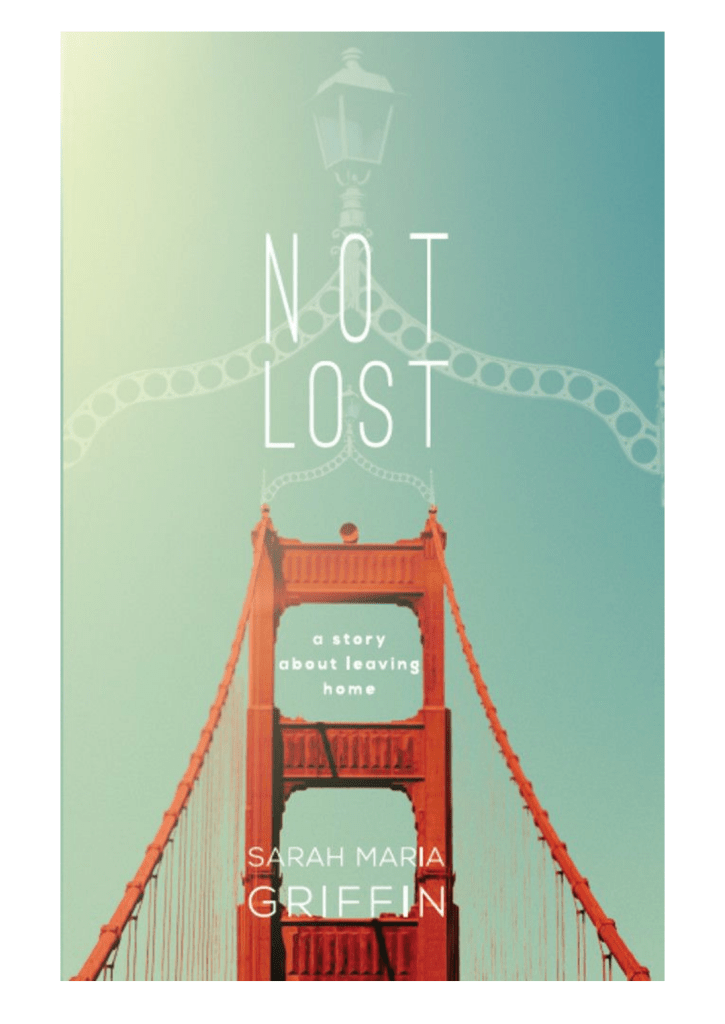
I first came across Sarah Maria Griffin’s writing online. I read and enjoyed some of her essays and articles, including her food column for The Coven, so when I discovered she had written a book about her first year living in the US I couldn’t wait to read it.
“Memoir is not what this thing is. It is just a true story. Except for the parts that are enormous staggering lies…”
Not Lost tells the story of a year in Sarah Maria Griffin’s life. The year she moved from Dublin to San Francisco.
From the beginning Griffin lays out that there is no tragedy here because she assumes people expect something awful to have happened in a memoir. I’m glad there are no tragedies here; instead what we are treated to is a beautifully written experience of finding your feet not only in a new home, but in a different country.
Full of observations about emigrating, job hunting, adjusting to a new kind of domesticity, exploring your surroundings whether they are new or not, and the importance of food, Not Lost is a thoughtful love letter to Dublin as much as it to San Francisco, settling down and dealing with the anxieties that life throws at you.
This book is littered with moments that made me laugh as well as some that made me cry.
Good Girls Don’t by Claire Hennessy

Emily Keating should probably spend more time doing her homework, but instead she is busy trying to figure out her place in the world. Something that isn’t easy for a 17 year-old, especially when you’re trying to help your friends.
There is Declan, who is suffering from depression. Lucy, who Emily used to have a crush on, whose current relationship looks like it is getting more serious than anyone expected. Hugh, Emily’s ex-boyfriend who is dating someone else. Barry is Emily’s best friend, the person she can always rely on and the one that almost everyone else thinks she is destined to be with.
Emily’s interventions don’t always make things better. In fact she often makes things worse, for everyone including herself.
At its core Good Girls Don’t is a story about teenagers getting to grips with friendship, sex and sexuality and everything that entails.
There are times when Emily isn’t particularly likeable, there are times when she is irritating, there are times when I want to bang certain characters heads together and tell them to cop on; typical teenage stuff really. But I kept turning the page because I wanted to see where their friendships and relationships were going.
I read Good Girls Don’t by Claire Hennessy when it first came out in 2004 and loved it. I was a couple of years older than the characters, at the time, but what struck me was that it was one of the first contemporary novels (especially YA novels) I came across with gay and bisexual characters. That it was written by an Irish author, and a teenager at that, was a bonus.
More than that, while the sexuality of the characters is entwined with the plot, the story isn’t all “So and so is gay or bisexual, shock horror”. There is normality to it all. This, somewhat depressingly, is as refreshing today as it was in 2004.
After reading Hennessy’s marriage equality related short story, Good Girls Vote Yes, involving Emily and her friends I decided to track down a copy of the original to re-read.
I’m glad I did. It’s still an enjoyable read.
Tender by Belinda McKeon
Advance Reader Copy (ARC) via Netgalley included.
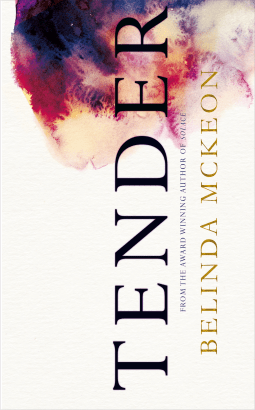
Sometimes you come across a book that you know you will re-read numerous times and recommend to anyone who will listen. Tender by Belinda McKeon is one of those books. Not since I read The Hours by Michael Cunningham for the first time have I been so enamoured with a novel.
Set in 1990s Ireland, this is a novel about friendship, youth, love, obsession and sexuality.
Catherine Reilly, from Longford, is living in Dublin to attend college when she meets James Flynn. Their friendship quickly becomes one where they want to spend as much time with each other as possible. Catherine is the person James turns to when the time comes to tell his parents that he is gay.
There were moments throughout, when I found myself thinking about my own time in college and the people I met. I swear some of them make appearances in this book, the characters are that realistic.
At times this isn’t an easy read (storyline wise as opposed to writing style wise), it feels claustrophobic yet necessary. McKeon’s writing feels raw, honest and is littered with nuanced and powerful storytelling.
I loved Tender so much I’m planning on buying a psychical copy, just so I can feel the pages between my fingers the next time I read it.
Intimacy Idiot by Isaac Oliver
Advance Review Copy (ARC) via Netgalley included.

Intimacy Idiot* is the debut collection of essays from playwright, author and performer Isaac Oliver. I’m not familiar with Oliver’s other work, but I have been on an essay reading kick lately so thought I would give this book a go.
From conversations he overheard on the subway, to poetry about random people, to tales from being a theatre box office attendant, and kiss-and-tell stories about his experiences with the men he had sex with, most of whom he picked up online; it seems that nothing is off limits for Oliver as he takes us into his world and entertains us (often in graphic detail).
The personal essays deal with sexuality, online dating, hook up culture (an American term, I know, but I can’t think of an equivalent phrase that’s used this side of the Atlantic), having safe sex within that hook up culture, accepting who you are and being comfortable in your own skin.
I particularly enjoyed the subway diaries and encounters from the box office as they provide a snippet of everyday life and served to remind me that we never really know what is going on in people’s lives. Yet we all continue to share space and time with each other.
This collection of essays is an accessible mix of humour and candour. I finished the book in one sitting and laughed frequently along the way.
Boo by Neil Smith
Advance Reader Copy (ARC) via Netgalley included.

When 13 year-old Boo wakes up in heaven he assumes his defect heart is responsible and sets about figuring out how to settle in to his new life, his reborn life.
Boo, whose real name is Oliver Dalrymple, didn’t fit in at his school back in America. He was a science geek who memorised the entire periodic table and didn’t really mix well with people.
When he discovers that heaven is divided by age and nationality, meaning he will remain a 13 year-old surrounded by other 13 year-olds, he isn’t pleased. But heaven is the perfect opportunity to carry out some new science experiments, so at least he has that to occupy his time and his mind.
Boo soon learns that it wasn’t the hole in his heart that killed him, he is a ‘gommer’, someone who was murdered. His murderer may also be in heaven, something that hasn’t happened before. Killers aren’t allowed into heaven.
Boo and Johnny, a classmate who was killed at the same school, set out to find Gunboy, the boy who killed them with no real idea of what they will do once they find him. They just know they need to find him.
Told through Boo’s eyes as he writes it all down for his parents, this novel deals with the idea of god, friendship, forgiveness and asks whether people can really change.
I enjoyed spending time with Boo and the friends he made in heaven. At times I thought I had it all figured out, but even with the ending I predicted I had no idea how the author, Neil Smith, was going to get us there and as I kept turning the pages I was less and less sure that my predictions would be right.
Boo* is a reminder of what good YA should be; it’s entertaining, it’s thought provoking and although it involves suspending your disbelief it doesn’t treat its readers like idiots.
If She Did It by Jessica Treadway
Advance Reader Copy via Netgalley included.

What if you began to suspect your child of an unspeakable crime?
Three years ago Hanna Schutt was almost bludgeoned to death in her bed. Her husband, Joe, didn’t survive the attack. Hanna was left with a disfigured face and no memory of the night in question.
The man convicted of the crime was her daughter’s boyfriend, Rud. Dawn was never charged for the murder of her father and the attempted murder of her mother but that doesn’t stop people believing that she played a significant role in the crime, especially since she stood by Rud throughout his trial.
Rud has now been granted an appeal. Following this news, Dawn decides to move home to support her mother.
If She Did It* (which is published as Lacy Eye in some territories) follows Hanna as she tries remember what happened that night in order to testify at Rud’s retrial.
What do the brief flashes and shadows that Hanna has started seeing mean? Is she actually remembering what happened or are they false memories of what she thinks happened? Can her memory be trusted?
While we are taken immediately into Hanna’s world the story starts slowly, but the pace quickens as Hanna starts to ask questions that she hasn’t faced up to before. While I sympathised with Hanna throughout the book, there were times when I wanted to shake some sense into her.
At the novel’s conclusion, there were one or two niggly details about Hanna’s flashbacks and memories that I was unsure about but over all I enjoyed If She Did It*.
The DUFF by Kody Keplinger

Kody Keplinger’s debut novel, The DUFF, was originally published in 2010 and is currently being re-promoted to coincide with the release of the film.
Bianca Piper is a particularly cynical seventeen year-old. Her mother is rarely home, her father has his own issues to deal with and a “relationship” that ended badly a few years ago has left her no longer believing in true love. This “relationship” isn’t explored nearly as much as it should be, it’s alluded to and we find out how it ended but we don’t learn a whole lot else and the parts that left me feeling uncomfortable aren’t elaborated on at all.
Bianca has her friends; Casey and Jessica and a crush on classmate Toby Tucker. Whatever is happening at home, she will be alright.
When Wesley, the school man-whore (as he’s described in the book), talks to her one night when she is out with Casey and Jessica things change. Bianca can’t stand Wesley, she thinks he’s selfish, arrogant and will use anyone to get what he wants. When he tells her that she is the DUFF – Designated Ugly Fat Friend – of her group she throws her glass of coke in his face.
Things don’t end there. She ends up kissing Wesley, because why not? She likes it. Hmmm, maybe she can stand him after all.
I read this in one sitting. It was engaging, entertaining and style wise easy to read. The characters were believable; contradictions and all, which stems from the fact that Kody Keplinger was a teenager when she wrote it. But it left me feeling conflicted.
Slut-shaming is rife and despite Keplinger trying to turn things around, especially with Bianca’s attitudes to some people changing, the lasting message for me was still that if you actually enjoy having sex then you must be escaping from something. There are no other explanations.
People are either in committed relationships or running away from their emotions. The possibility of simply being a fan of sex doesn’t get a look in. How Bianca and Wesley’s relationship played out just reinforced this message for me. And frankly, I think that’s nonsense.
I don’t know if this was the intended message. I hope it wasn’t because it’s not a particularly nuanced message for young people to hear.
How To Be A Heroine by Samantha Ellis
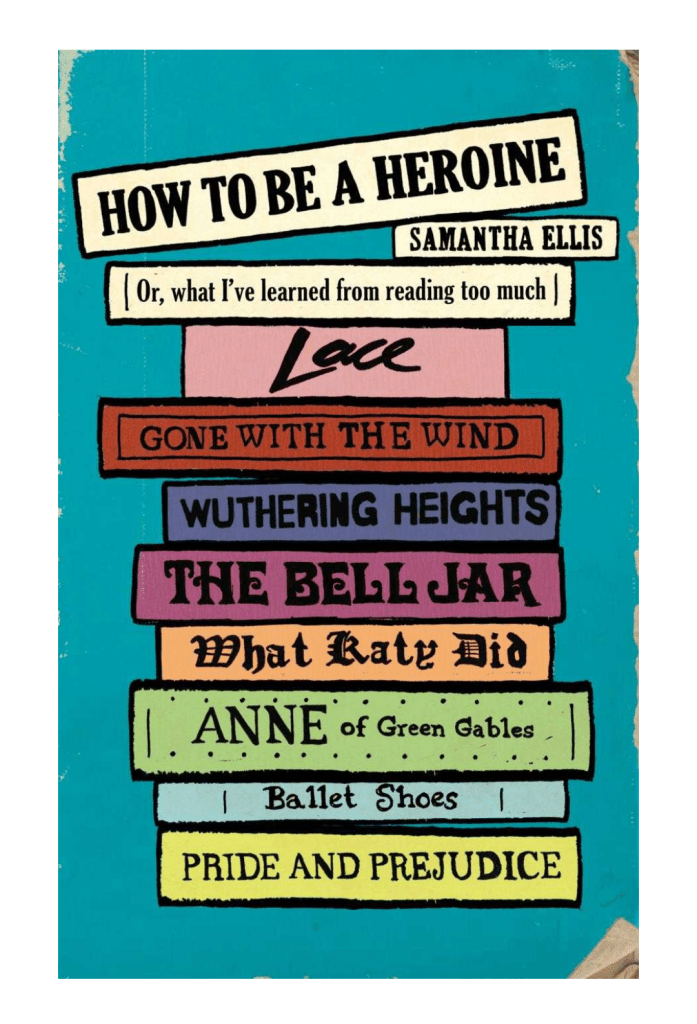
How To Be A Heroine has been on my radar for a while, but now seemed like the perfect time to read it since it deals with something I’m currently working on a blog post about; the idea that the time, place and state of mind you are in plays a significant part in how you react to novels, plays, films, and music.
Samantha Ellis finds herself arguing with her best friend about whether Cathy Earnshaw is a better heroine than Jane Eyre. Ellis is firmly in the Cathy camp, while her friend thinks that Jane is the one who really makes her own way in the world.
Has she spent her life trying to be Cathy Earnshaw when she should have been trying to be Jane Eyre? A return to the literary heroines that shaped her life was in order. How did she feel about them now?
Some characters stood up to the scrutiny better than others, some opinions changed for the better and some changed for the worst.
Part memoir and part literary analysis, with a side of women’s studies, Ellis’ words are refreshing, yet somehow comforting. It will leave you wanting to read the books you haven’t and re-read the ones you love. A book lover’s dream.
How To Be A Heroine is a book I wish I had written. You need it in your life. I will be thrusting it into people’s hands, demanding they read it and then talk about it for hours with me.